
Handcrafted from the First Moment
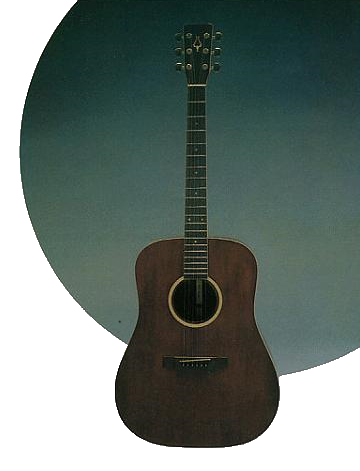
When you hold a Daion guitar, its craftsmanship immediately stands out. Skilled artisans hand-shape the neck, apply a flawless finish, and attend to every detail, showing that this guitar is far from mass-produced. Furthermore, every component feels unique and radiates care. From the subtle curvature of the neck to the perfectly smooth body, you sense the dedication behind each part. Experienced craftsmen work on each piece of wood with precision and love.
Craftsmanship and Production Steps
A small, highly skilled team builds each Daion guitar. They perform most of the work entirely by hand, while machines handle only supporting tasks. Expert craftsmen adjust the neck and frets and personally test the playability and tone of every instrument. As a result, Daion guarantees exceptional quality.
Inside a Daion Guitar
Look inside a Daion guitar, and you will see no glue residues or misaligned braces. Craftsmen strategically place each reinforcement to maximize strength and resonance. Consequently, the guitar produces sparkling highs and deep, clear bass that remain perfectly balanced.
Materials and Finish
Artisans craft the top, back, and sides from carefully selected tonewoods to achieve superior acoustic properties. They shape the neck for comfort, strength, and easy adjustment. In addition, tuning machines turn smoothly and maintain excellent tuning stability. Finally, the finish protects the wood while enhancing its natural beauty.
Wood, Stock and Aging
Daion treats wood like gold and silver. They store selected tonewoods in drying rooms for one to two years until the moisture content drops to about 7%. Then, the team allows the wood to gradually reach its final balance. This process prevents shrinkage problems and lays the foundation for a rich, responsive tone.
Step-by-Step Production Process
 1. Wood Selection 1. Wood Selection | Daion carefully chooses wood based on quality, strength, grain, and color. In addition, they inspect each piece for consistency to ensure optimal resonance. |
 2. Soundhole 2. Soundhole | Machines cut the rough soundhole, after which craftsmen complete all details by hand. |
 3. Inlay Work 3. Inlay Work | Artisans hand-inlay the edges around the soundhole to achieve a perfect fit. |
 4. Bracing Glue-Up 4. Bracing Glue-Up | They glue each brace by hand and press it to ensure a strong, durable bond. |
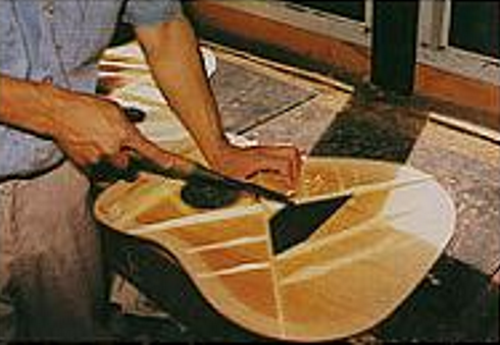 5. Hand Planing 5. Hand Planing | After pressing, craftsmen meticulously hand-plane the braces, producing maximum tonal response and balance with rich bass and sparkling highs. |
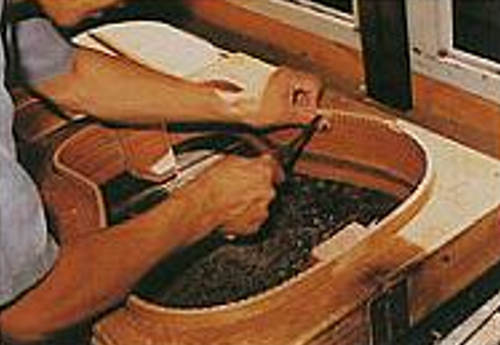 6. Shaping the Braces 6. Shaping the Braces | Using small chisels, artisans shape each brace by hand to match the guitar’s curvature, further enhancing resonance in the top and back. |
 7. Assembling Body and Top 7. Assembling Body and Top | They carefully fit the braces to the body and top to ensure perfect resonance and structural integrity. |
 8. Neck Formation 8. Neck Formation | Craftsmen roughly shape the neck with power tools, then finish it by hand. They also glue the fingerboard manually to achieve precise intonation and fret placement. |
 9. Finishing 9. Finishing | Every guitar receives a hand-applied lacquer finish to preserve and enhance the natural beauty of the wood. |
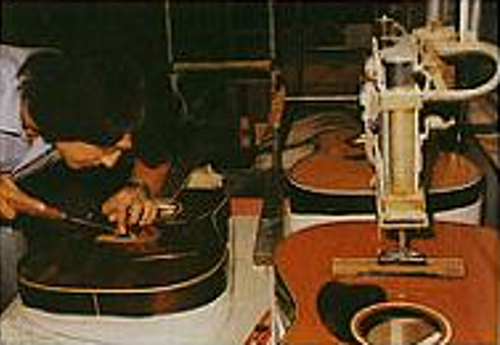 10. Bridge and Neck Setup 10. Bridge and Neck Setup | Craftsmen manually adjust string alignment, scale length, nut and saddle height, and neck tension for optimal playability. |
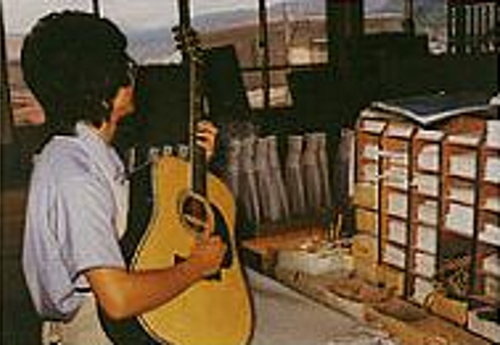 11. Final Inspection and Adjustment 11. Final Inspection and Adjustment | An experienced guitarist personally tests each instrument and makes final adjustments. If any guitar shows imperfections, the team corrects them before approval. |
Inspection and Quality Assurance
The factory consists of six departments: materials, construction, sanding, finishing, parts, and quality control. Each department head personally inspects the instruments and returns any that do not meet standards. As a result, Daion guarantees precision, craftsmanship, and perfection in every guitar.